Data Input & Integration
Connect APIs, sensors, energy meters, cooling systems, server utilisation and monitoring tools without hardware modifications.
Technology
Swizet uses a structured Google Cloud data pipeline to transform raw data centre signals into predictive recommendations, dashboards and sustainability metrics.
Core stack
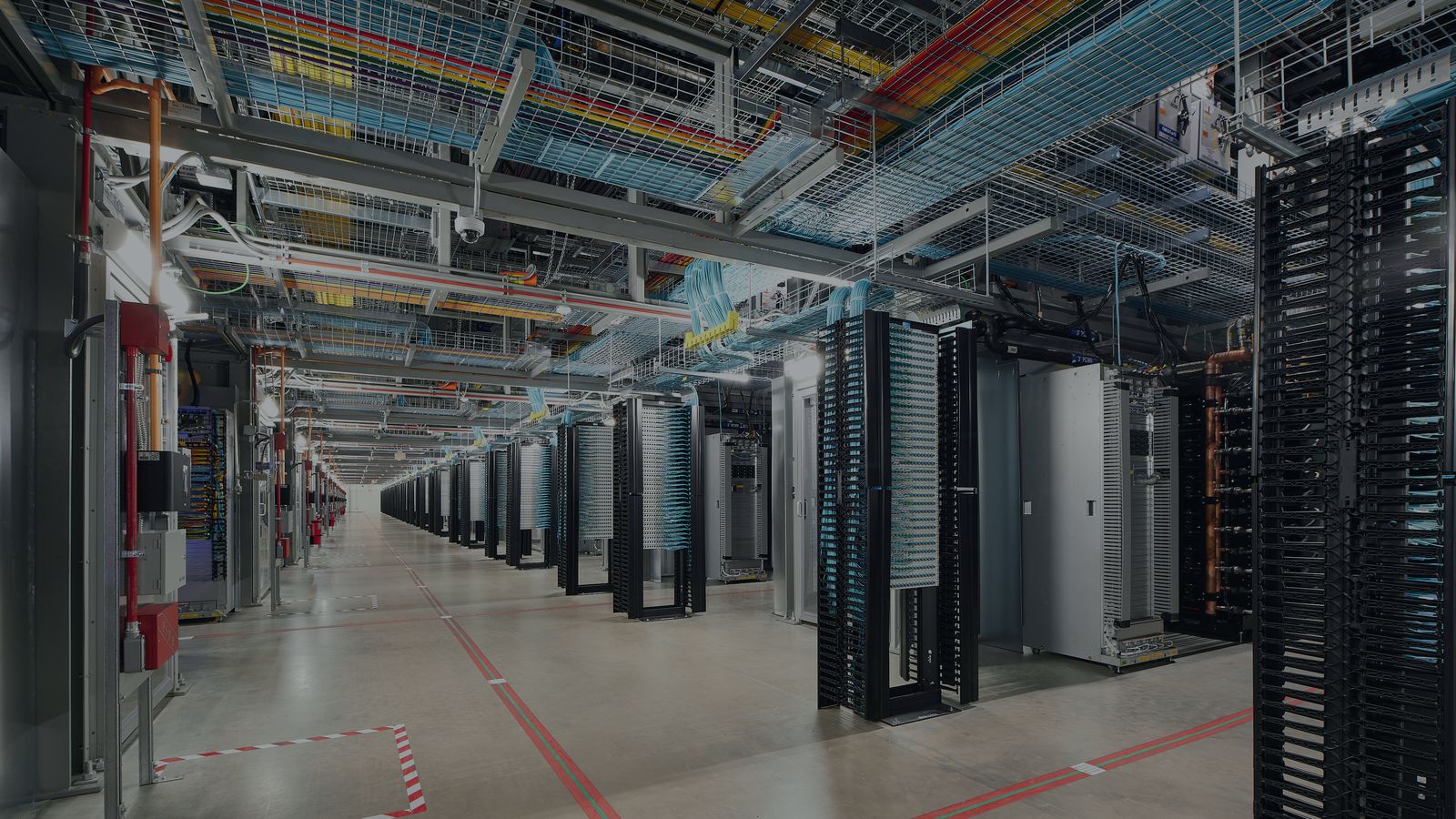
The platform is designed to handle large volumes of streaming data from complex data centre environments while delivering actionable insights with minimal latency.
It combines data engineering, machine learning and cloud services to create a unified intelligence layer for real‑time optimization strategies.
System workflow
Connect APIs, sensors, energy meters, cooling systems, server utilisation and monitoring tools without hardware modifications.
Cloud Pub/Sub moves infrastructure data through a reliable, low‑latency messaging pipeline.
Dataflow prepares raw signals by removing noise, standardising formats and enriching datasets.
Vertex AI models forecast energy demand, temperature spikes, anomalies and optimisation actions.
Operators see energy, cooling, recommendations, alerts and historical trends in a clear interface.
Carbon emissions, PUE, sustainability indicators and ESG reporting support complete the operational loop.
Closed‑loop intelligence
Through continuous learning and feedback loops, Swizet can evolve from recommendation‑based support to semi‑autonomous and fully autonomous optimization, reducing manual intervention and improving efficiency over time.